
You’ve probably heard that sugar is the enemy of fitness goals. Cut the carbs, they say. Avoid sugar at all costs if you want to build muscle and lose fat. But here’s the plot twist that might surprise you: when used strategically, sugar can actually support your muscle-building efforts—especially if you’re training hard with Weights & Glory resistance bands.
The key isn’t avoiding all sugar. It’s understanding when, how much, and what type to consume for optimal results. Let’s cut through the confusion and get to the science-backed truth about post-workout nutrition.

Why Your Muscles Need Carbohydrates
When you lift weights or do high-intensity training, your muscles burn through their primary fuel source: glycogen, which is stored carbohydrate. During a hard workout, you can deplete 30-40% or more of your muscle glycogen stores, depending on intensity and duration.
After training, your body is primed to replenish those stores. This is when strategically timed carbohydrates—including some simple sugars—can be incredibly beneficial. Think of it like refueling a car after a long drive. You need fuel to go again.
If you’re new to resistance training, our guide to the best resistance band exercises for beginners can help you build a consistent training foundation before focusing on advanced nutrition strategies.
Here’s what happens: When you consume carbs post-workout, your muscles become insulin-sensitive sponges, ready to absorb glucose and convert it back into glycogen. This isn’t just about recovery—it’s about being ready for your next training session and supporting muscle growth.

The Post-Workout Window: What Research Actually Shows
For years, fitness culture has promoted the idea of an “anabolic window”—a narrow 30-60 minute period after training when you must consume protein and carbs or risk missing out on gains.
The reality is more nuanced. While there’s no urgent 30-minute deadline, the hours immediately following training are indeed when your muscles are most insulin-sensitive and primed for nutrient uptake.
Research shows that consuming carbohydrates within 2-3 hours post-workout helps:
- Replenish glycogen stores faster
- Reduce muscle protein breakdown
- Support the release of anabolic hormones
- Prepare you for your next training session
- Create an optimal environment for muscle recovery and growth
The takeaway? You don’t need to panic and chug a shake the second you rack the weights. But you also shouldn’t ignore post-workout nutrition entirely. Planning meals in advance can make this easier, so use our meal prep for fitness guide to prepare balanced post-workout meals.
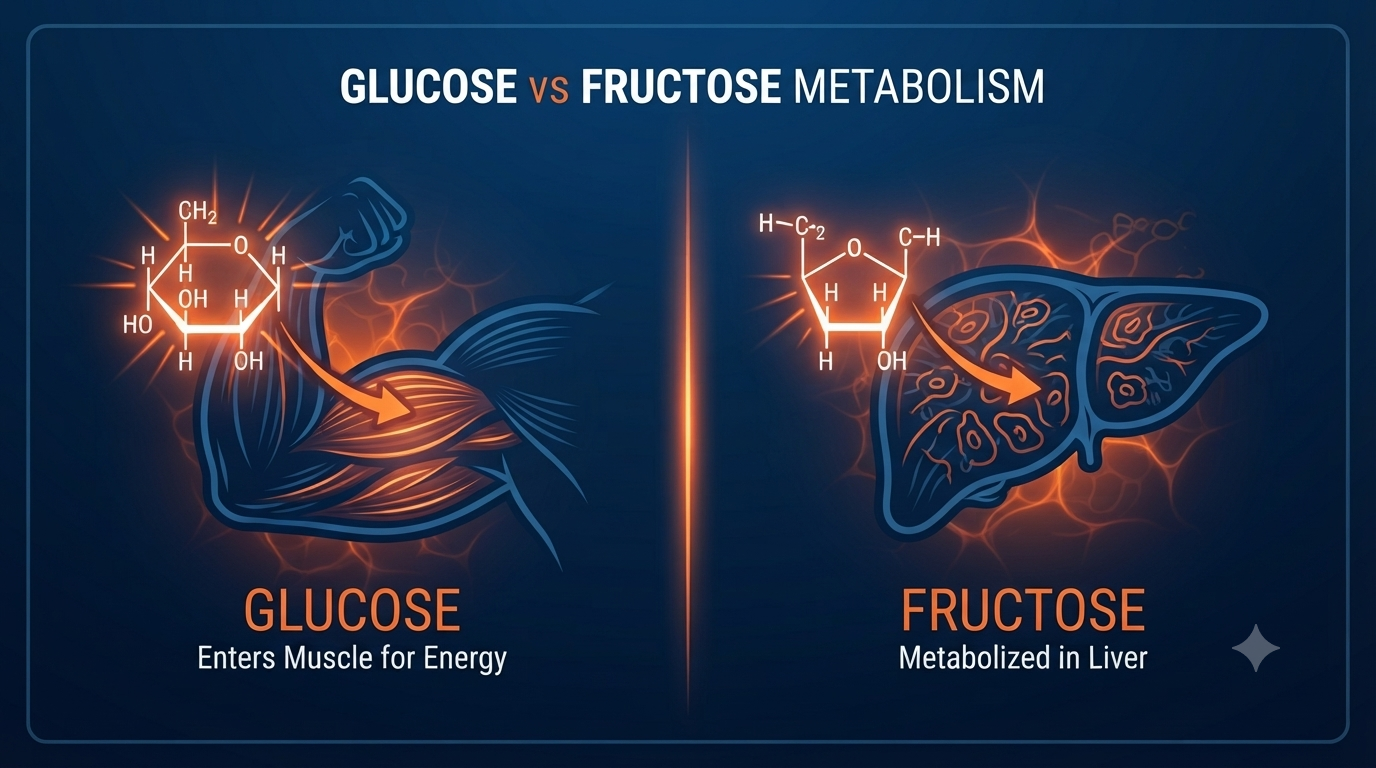
Glucose vs. Fructose: Choose Wisely for Recovery
Not all sugars are equally effective post-workout. Understanding the difference between glucose and fructose can help you choose carbohydrates that better match your recovery needs.
Glucose goes directly to your muscles. Fructose is processed primarily by your liver.
For post-workout recovery, you want glucose-based carbohydrates that can quickly replenish muscle glycogen. Good options include:
- White rice (easy to digest, glucose-rich)
- Potatoes (white or sweet, both work well)
- Rice cakes (convenient, portable)
- Dextrose powder (pure glucose, very fast-acting)
- Fruit (contains both glucose and fructose, but fiber slows absorption)
- Honey (glucose and fructose blend)
Fruit isn’t bad—a banana or berries with your protein shake is
fine. But if you’re serious about optimizing glycogen replenishment, prioritize glucose-based carbs.
How Much Do You Need?
This depends on several factors:
- Your body weight
- Training intensity and duration
- Your goals (muscle building vs. fat loss)
- How soon you’ll train again
Before adjusting your intake, use the macro calculator to estimate your daily protein, carbohydrate, and fat targets. You can also use the nutrition intake calculator to create a more complete starting point.
General guidelines from sports nutrition research:
- For moderate training (30-45 minutes): 0.5-0.7g carbs per kg body weight
- For intense training (60+ minutes): 0.8-1.2g carbs per kg body weight
For a 180 lb (82 kg) person after a hard 60-minute session, that’s roughly 65-100g of carbohydrates.
If you’re training again within 24 hours, lean toward the higher end. If you have 48+ hours before your next session, you have more flexibility.
Combine with Protein for Best Results
While carbs replenish glycogen, protein provides the amino acids for muscle repair and growth. The combination is more effective than either alone.
Aim for a 3:1 or 4:1 ratio of carbs to protein post-workout. For example:
- 80g carbs + 20g protein
- 100g carbs + 25g protein
Practical post-workout meals:
- White rice (1-2 cups) with grilled chicken breast (4-6 oz) and vegetables
- Greek yogurt (1 cup) with honey (2 tbsp) and berries
- Protein shake with banana, oats, and milk
- Rice cakes with peanut butter and honey
- Sweet potato with lean ground beef and salsa
For additional recovery support, explore the Performance Pack or browse the full selection of supplement packs. Supplements should complement—not replace—a balanced diet, adequate protein, quality sleep, and consistent training.
Biblical Stewardship Applied
1 Corinthians 6:19-20 reminds us: “Do you not know that your bodies are temples of the Holy Spirit, who is in you, whom you have received from God? You are not your own; you were bought at a price. Therefore honor God with your bodies.“
Strategic nutrition isn’t vanity—it’s stewardship. When you fuel your body properly for the work you’re asking it to do, you’re honoring God’s design and maximizing your capacity to serve Him and others with strength and vitality.
Using sugar strategically post-workout isn’t about gaming the system or obsessing over perfect nutrition. It’s about wisdom—understanding how God designed your body and working with that design, not against it. This reflects the broader faith and fitness approach at Weights & Glory.
The Real Answer: Context Matters
So is sugar good or bad for building muscle? The answer is: it depends.
Post-workout sugar consumed strategically? Beneficial for recovery and performance.
Mid-afternoon candy bar while sitting at your desk? Not helpful.
The difference isn’t the sugar molecule itself—it’s the context: timing, amount, type, total diet, and activity level. As you consider your overall intake, our article on whether sugar is really bad for you provides additional perspective.
Your Next Step
This week, plan your post-workout nutrition intentionally. Within 2 hours of training, consume a meal with fast-acting carbs and quality protein. Track how you feel and perform in your next workout. Pay attention to:
- Energy levels during your workout
- Recovery between sessions
- Muscle soreness
- Performance improvements over time
Nutrition isn’t one-size-fits-all. Find what works for your body, your training, and your goals. And remember: you’re not just building muscle—you’re building a body capable of serving God and others for the long haul.
That’s a goal worth pursuing with intention and wisdom. Browse the Weights & Glory shop for training and nutrition resources to support your journey.
Sources and Further Reading:
- Ivy JL, et al. Muscle glycogen synthesis after exercise. J Appl Physiol. 1988;64(4):1480-1485.
- Kerksick CM, et al. International Society of Sports Nutrition position stand: nutrient timing. J Int Soc Sports Nutr. 2017;14:33.
- Aragon AA, Schoenfeld BJ. Nutrient timing revisited: is there a post-exercise anabolic window? J Int Soc Sports Nutr. 2013;10(1):5
- Jentjens R, Jeukendrup AE. Determinants of post-exercise glycogen synthesis during short-term recovery. Sports Med. 2003;33(2):117-144.
- Ivy JL. Glycogen resynthesis after exercise: effect of carbohydrate intake. Int J Sports Med. 1998;19 Suppl 2:S142-5.